Sierra Leone is home to 23 indigenous languages, ranging from widely spoken languages with official status to languages with only a handful of speakers left.
Vitality levels below follow standard language endangerment classifications, informed by Ethnologue and published research on Sierra Leone's language ecology.
Krio is Sierra Leone's lingua franca and the first language of the Krio people, descendants of freed and repatriated settlers in Freetown. Most Sierra Leoneans understand it as a second language, and it is closely related to other English-based creoles across West Africa.
Temne is spoken by the Temne people across the Northern and North West Provinces and is one of Sierra Leone's largest languages by number of speakers. It has official status where it is spoken and is used as a language of instruction in schools.
Mende is spoken across the Southern and Eastern Provinces and, alongside Temne, is one of Sierra Leone's two largest indigenous languages. It has its own historic script, Kikakui, and official status in the areas where it is spoken.
Limba is spoken by the Limba people mainly in Bombali, Koinadugu, Kambia, Karene, and Tonkolili districts. It remains widely spoken within the Limba community, though it faces growing pressure from Krio as a lingua franca, which is part of why SILCC publishes Limba-language learning materials.
Kono is spoken in Kono District in the Eastern Province, an area also known for diamond mining. It is considered a stable language, actively used within its community.
Loko is spoken in Port Loko District in the Northern Province and is closely related to Mende. It has a smaller speaker population than many of Sierra Leone's larger languages but continues to be passed down within Loko communities.
Koranko, also spelled Kuranko, is spoken in the Koinadugu and Falaba districts of northern Sierra Leone and across the border in Guinea. It is classified as a stable language, actively used across generations.
Kissi is spoken in Kailahun District, in the "parrot's beak" region bordering Guinea and Liberia. It is mutually intelligible with Kissi varieties spoken across both borders, connecting communities across three countries.
Mandingo, also known as Mandinka, is spoken by Mandingo trading communities across Sierra Leone, with roots reaching across West Africa. It remains a vital, widely spoken language regionally, even where its Sierra Leonean speaker communities are smaller.
Susu is spoken by Susu communities mainly in the north west of Sierra Leone, near the Guinea border, where it is also a major regional language. It continues to be actively spoken and passed down within Susu communities.
Yalunka is spoken in the far north of Sierra Leone and is closely related to Susu. It has a smaller speaker population, concentrated near the Guinea border.
Fula, also known as Fulani or Pular, is spoken by Fula communities across Sierra Leone and is part of one of the largest and most widespread language families in West Africa. It remains actively spoken within Fula communities nationwide.
Sherbro is spoken on Sherbro Island and the surrounding coast in the Southern Province. It is closely related to Temne but not mutually intelligible, and it is losing speakers as Krio and Mende become more dominant in the region.
Krim is spoken by a small number of people along the southern coast of Sierra Leone. It has an unusual split predicate sentence structure, rare among the world's languages, and is the focus of ongoing documentation efforts.
Bom is spoken by a small remaining community in southern Sierra Leone and is closely related to Krim. Researchers estimate only a few dozen to a few hundred speakers remain, most of them older adults.
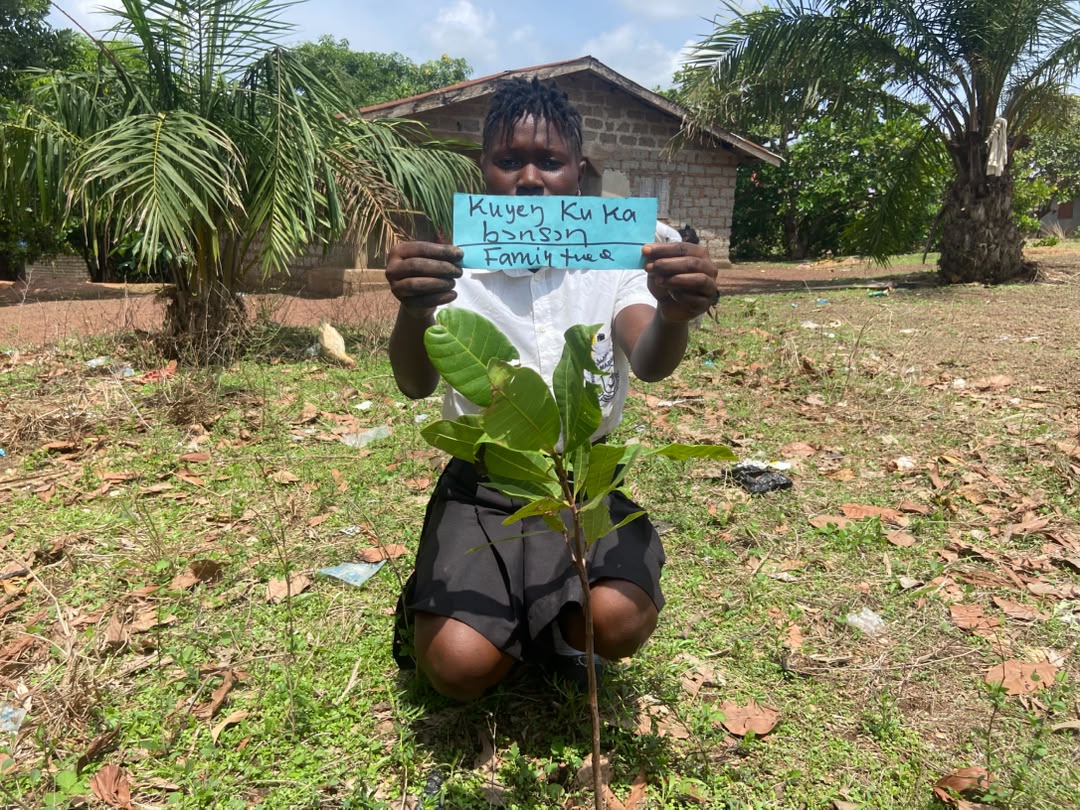
Mani, also known as Bullom So, is spoken in a handful of villages in the Samu chiefdom of Kambia District, near the Guinea border. Nearly all remaining speakers are over 60 years old, making it one of the most urgently endangered languages, and the focus of SILCC's tree-naming and language revitalisation work.
Kim is a critically endangered language historically spoken in southern Sierra Leone, closely related to Bom and Krim. Only a small number of speakers remain.
Gola was historically spoken along Sierra Leone's border with Liberia. It is now considered extinct in Sierra Leone, though related Gola-speaking communities remain across the border in Liberia.
Vai is spoken in Pujehun District near the Liberian border and is one of the few African languages with its own indigenous writing system, a syllabary invented in the 1830s. Around 15,000 people speak Vai in Sierra Leone, with a larger population across the border in Liberia.
Bassa was historically spoken in Sierra Leone and is related to the Bassa language still spoken in Liberia today. In Sierra Leone it is now considered extinct.
Banta was a small Mel language once spoken in southern Sierra Leone. It is now considered extinct, with no remaining fluent speakers.
Dama was historically spoken in Sierra Leone and is now considered extinct. Little documentation of the language survives.
Gallinas was historically spoken along Sierra Leone's southern coast. It is now considered extinct, with the Gallinas name mostly surviving today in local place names.
SILCC's tree-naming project and the Limba Literacy Book are two ways we're working to keep Limba and Mani alive for the next generation.